Supplement 1.7: Radiation quantities and radiometry (6/9)
The radiance
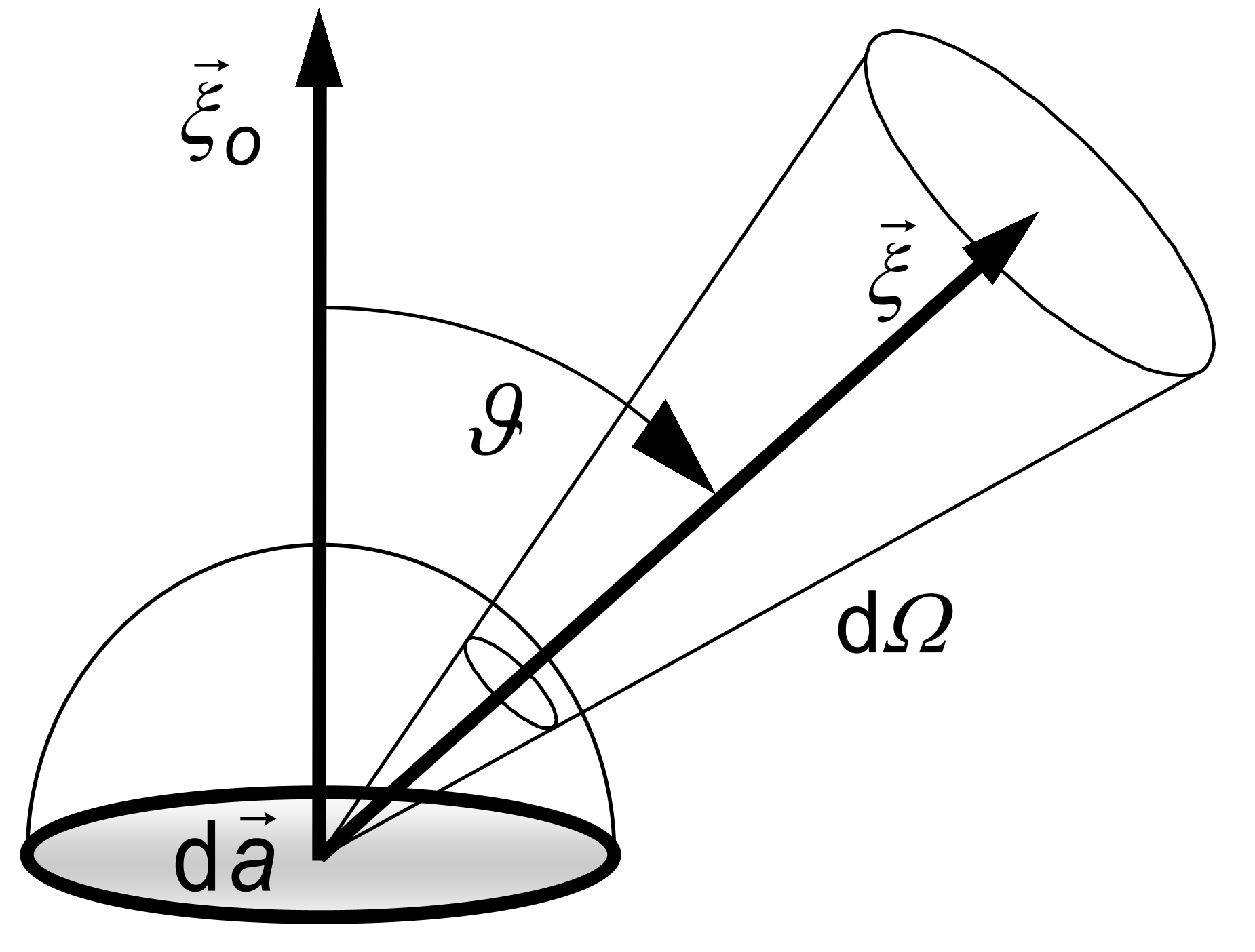
The radiance L is the most fundamental radiometric quantity. It combines all of the dependencies mentioned so far: radiant power ϕ, the radiating (or irradiated) area a, a direction in space and the solid angle Ω around this direction.
The radiance characterises the radiant power emitted by the area into this solid angle:
Formula symbol:
Unit of measurement: Watts per square metre per steradian,
The special feature of radiance is that it is a characteristic property of the radiation source. Its value remains unchanged as the radiation propagates through space, provided that no changes occur due to absorption or scattering. As the distance from the source increases, the solid angle Ω encompasses a quadratically increasing area. On the other hand, this is compensated by the quadratically decreasing irradiance on the surface, which is why the radiance remains constant. This is clearly illustrated in the following graphic.
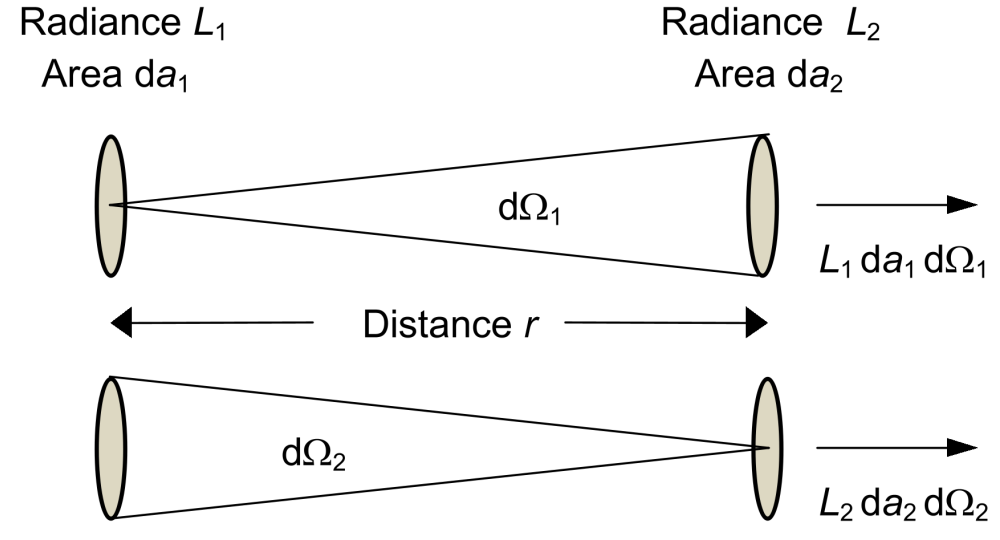
The situation from the perspective of the emitting surface da1 is shown above, and the situation from the perspective of the irradiated surface da2 is shown below. Obviously, the following applies:
Substituting into the relationships given in the graph yields .